Your Custom Text Here
In October 2024, as artist in residence on King Island in the Bass Strait between mainland Australia and Tasmania, I prepared to work on my long-term focus of birds and bird sounds. My motivation for applying was, in the previous year, I had hand bound a copy of a letter written by the French explorer Nicholas Baudin written from King Island in 1802. Bound copies of the letter, printed by the South Australian State Library, were shown in a travelling exhibition in several small galleries in Australia. I embroidered an image of the extinct King Island emu for the cover of the book and stitched a map within the book-case. I was keen to travel to the source to build on my work on birds.
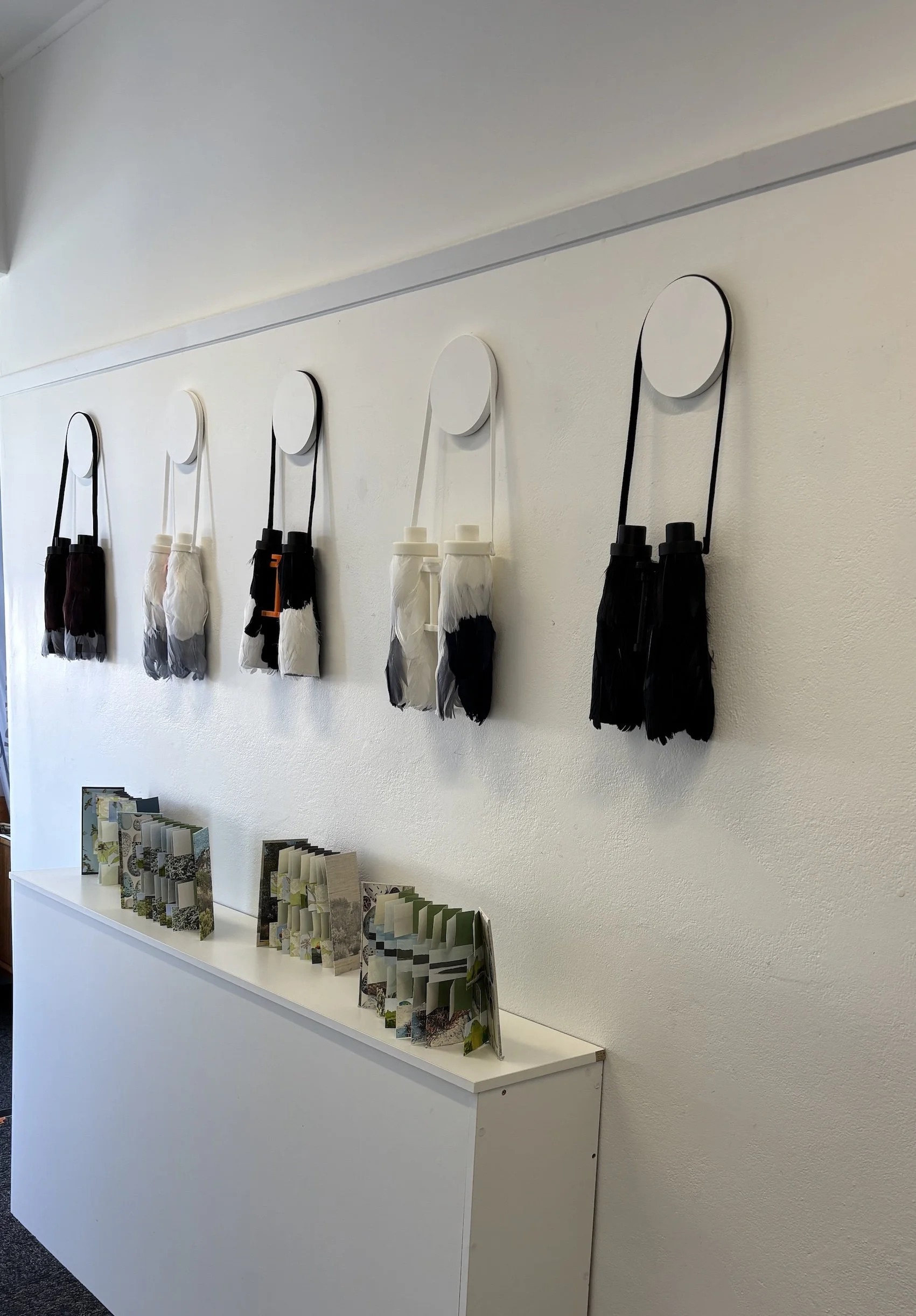
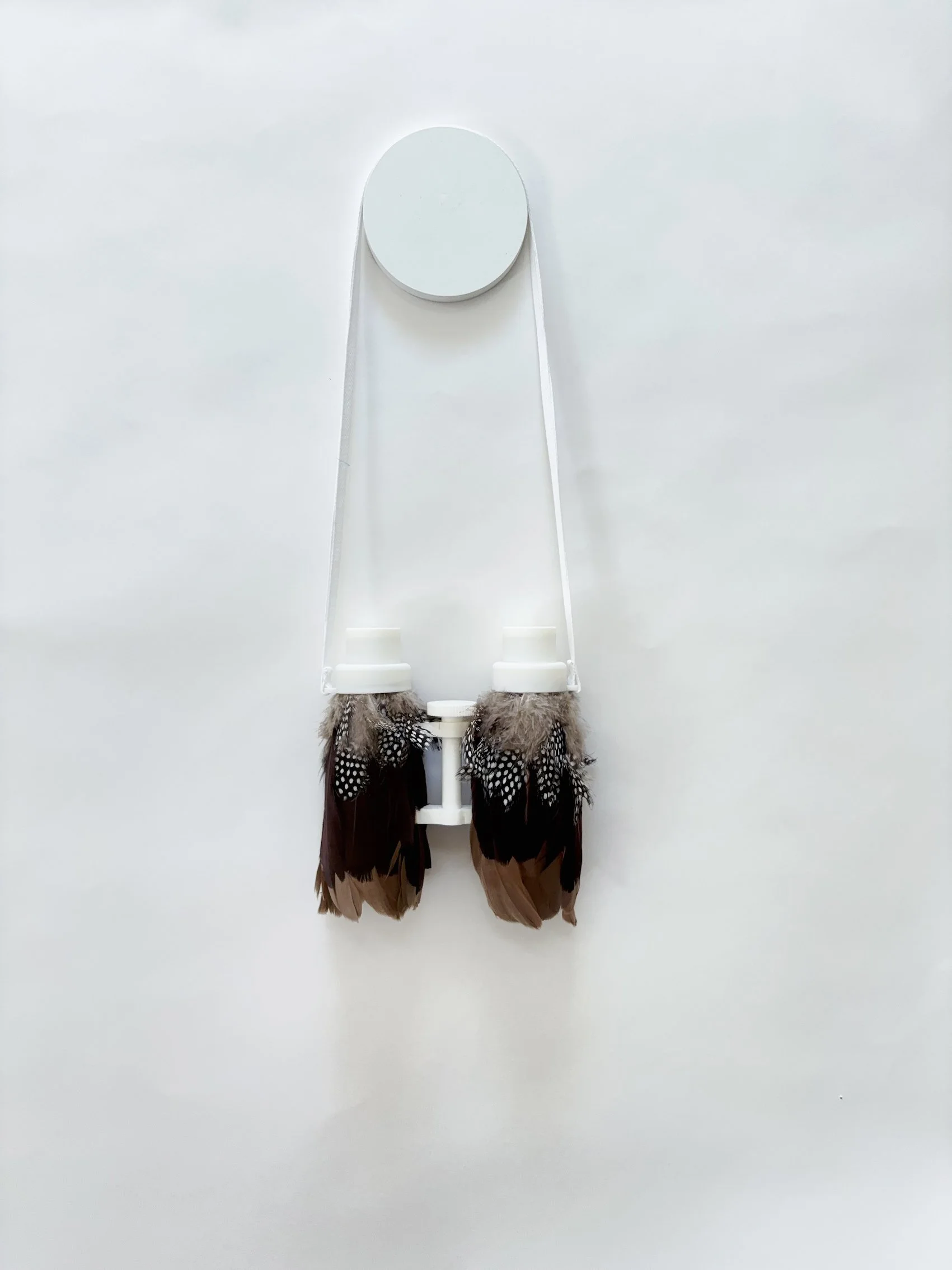
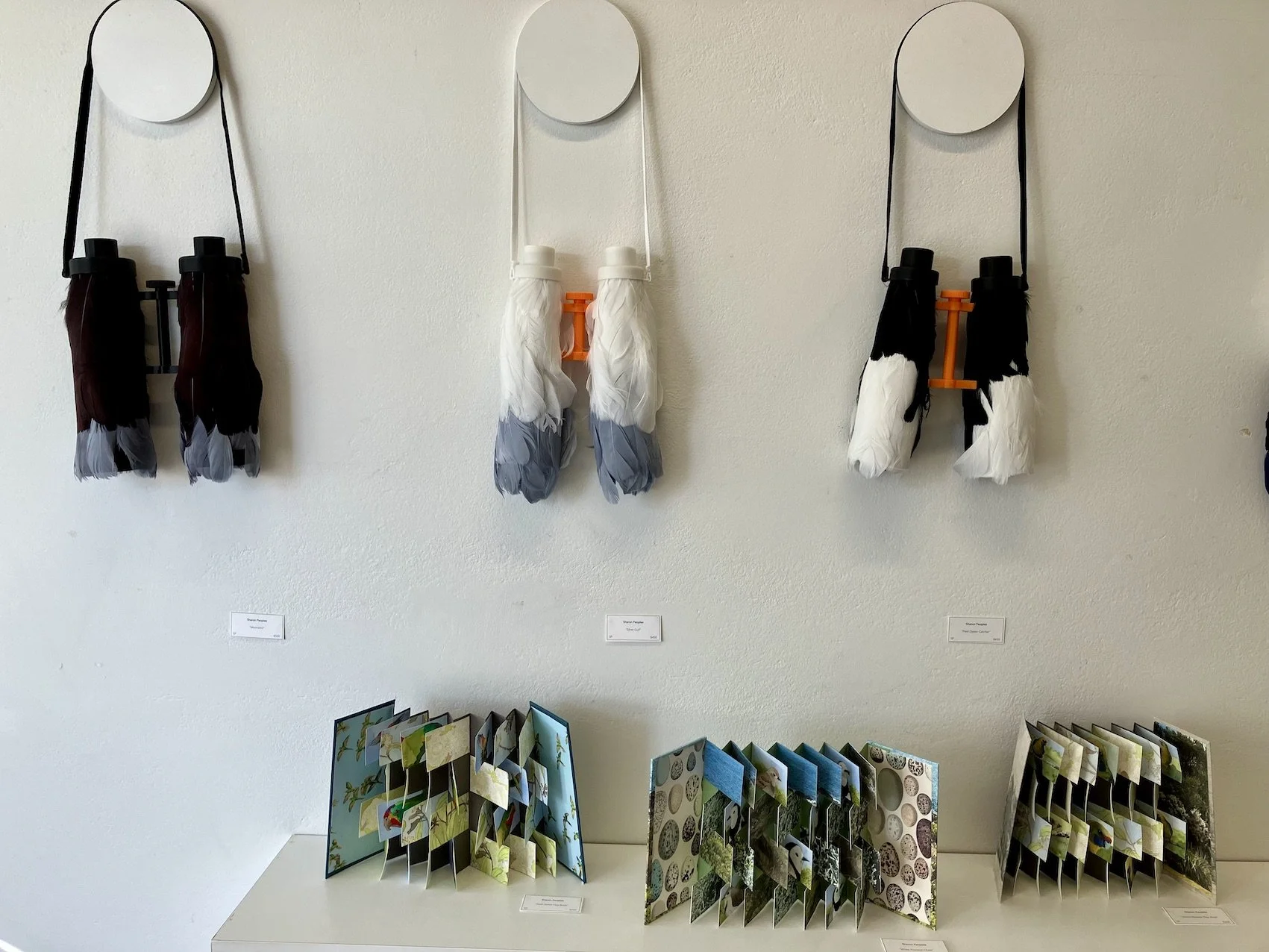
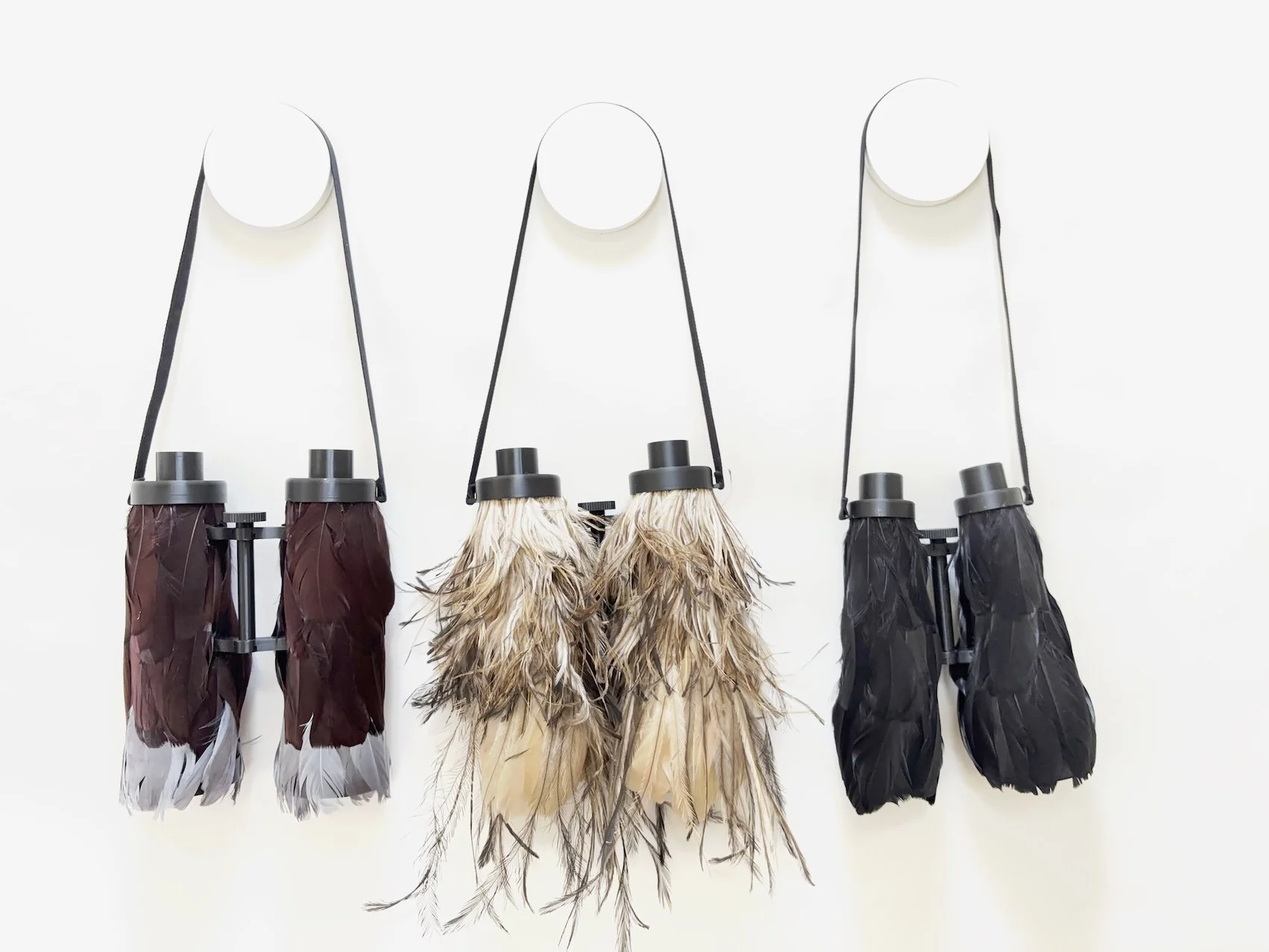
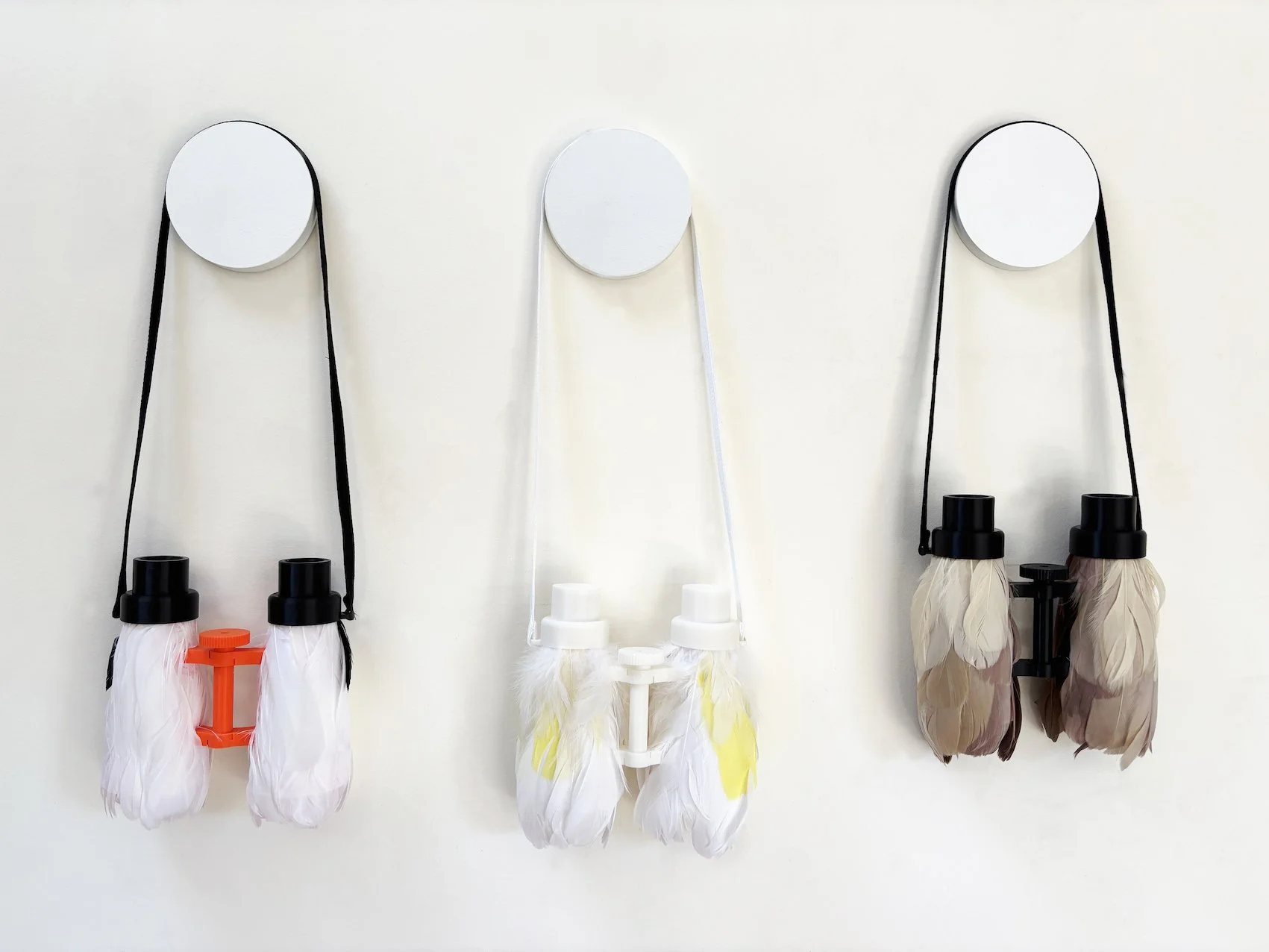
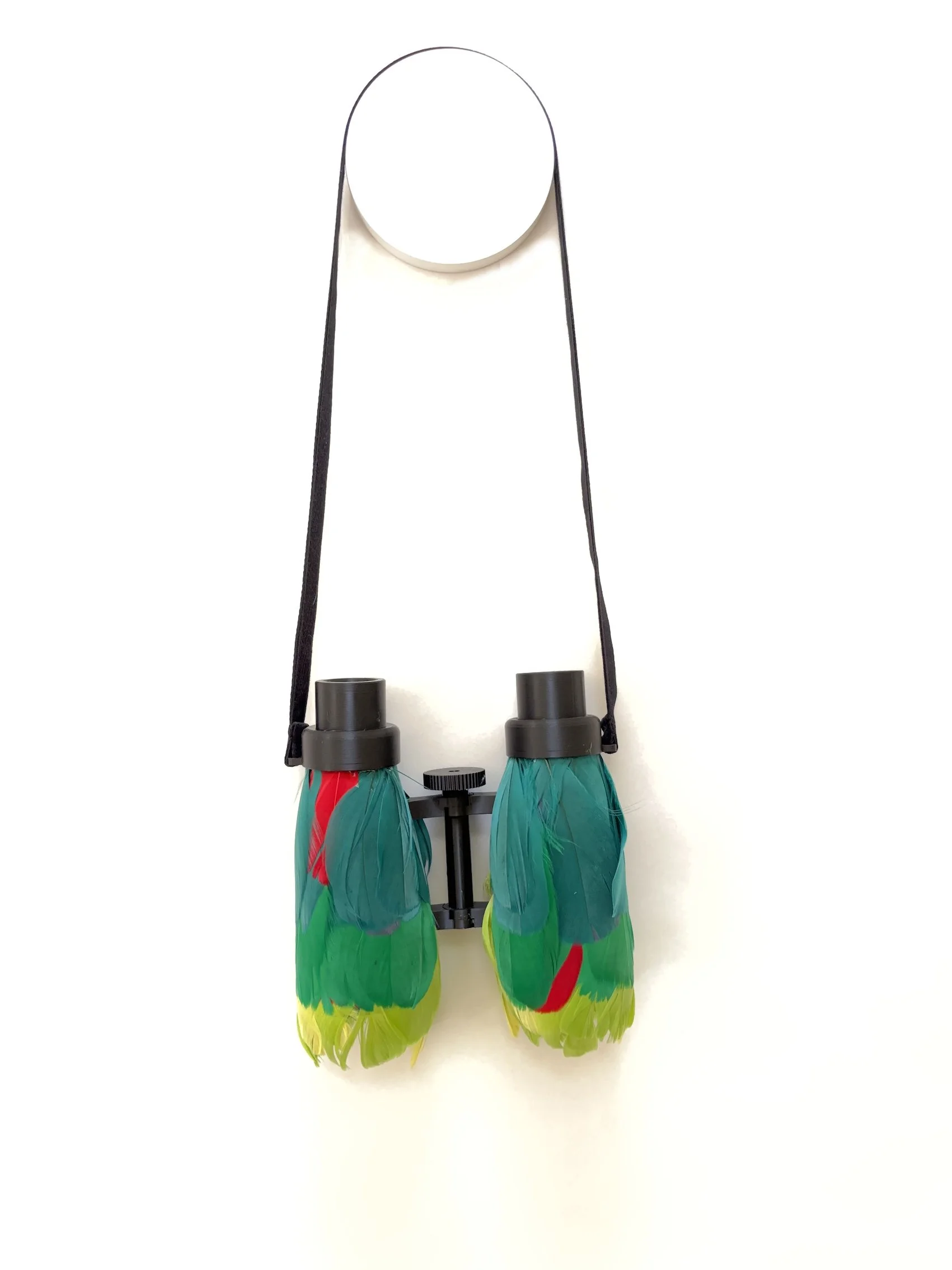
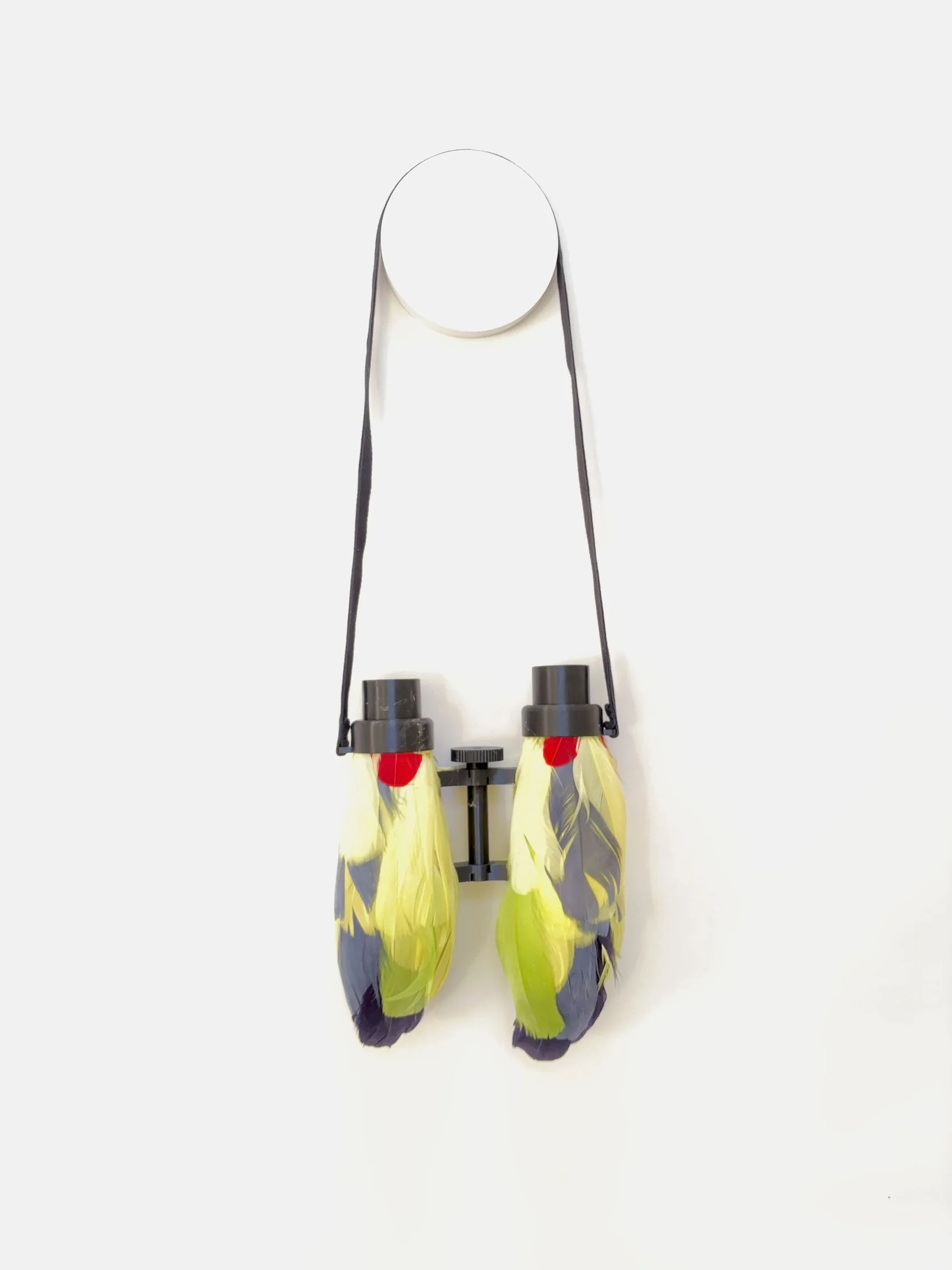
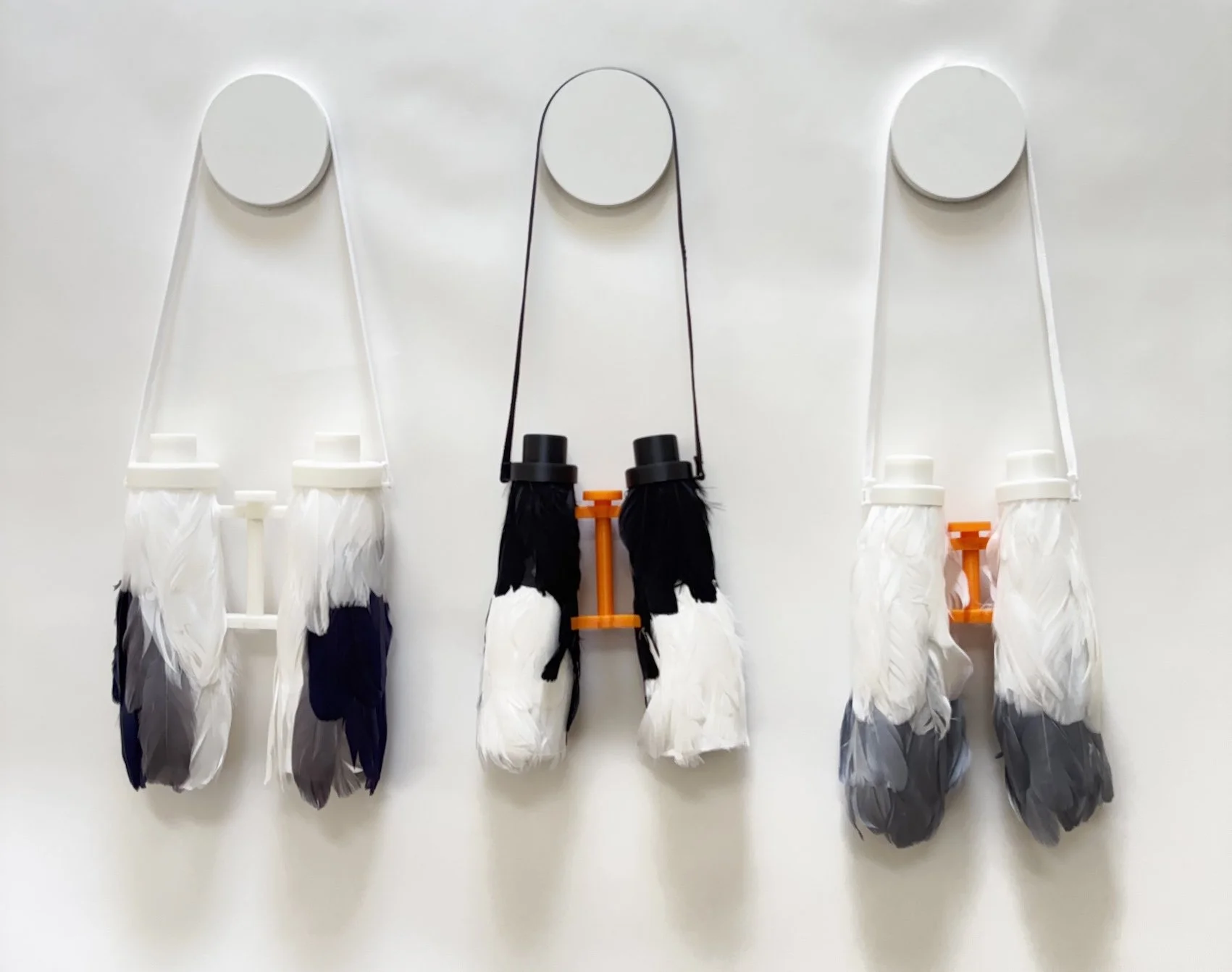
Once on the island the very strong winds, the Roaring Forties, quickly shifted my intentions of making the aural visible. I participated in the Spring bird count organised by the local LandCare group and supported by Birdlife Australia. What became apparent was the observation that all participants, including myself, sported binoculars. These status pieces were worn much like jewellery around the neck. Combining this format with the birds seen on the count and the local bird guides led me to constructing artworks based on binoculars in my home studio. I worked with an engineer to 3-D print parts of binoculars, such as the focussing mechanism and eye pieces. The feathers matched the birds I saw as well as those that are extinct and endangered on King Island. In particular work comments on the steep decline of the number of Swift Parrots, that migrate from northeastern Australia, across King Island and onto Tasmania in the spring and summer to feed. In the 1980s there were 3500 parrots. With the decimation of breeding grounds by logging, experts say that by 2030 there will be 70.
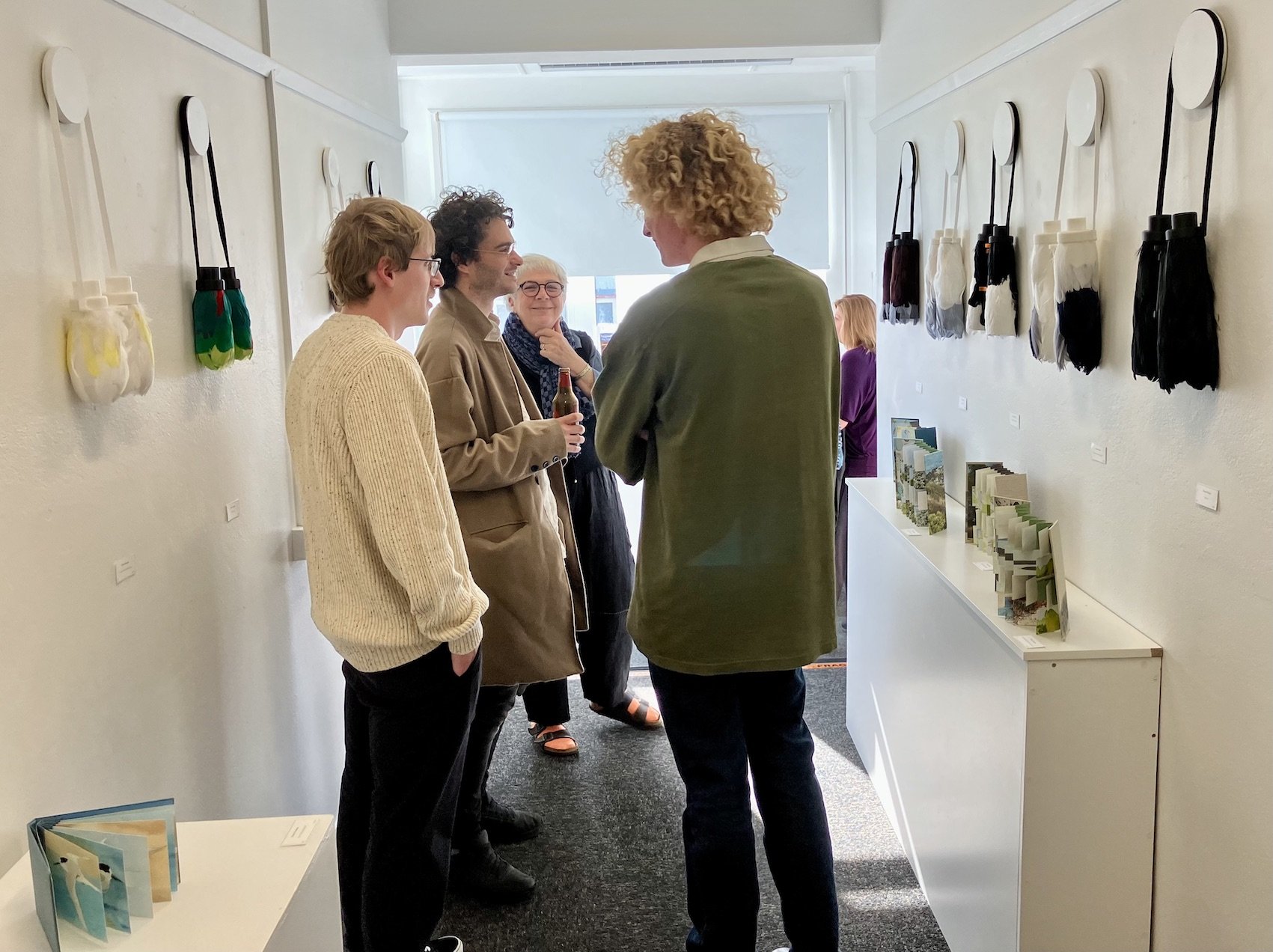
I chose the hallway space as often binoculars are kept in accessible spots in order to be able to grab them as you run out the door to see what bird was making that noise.
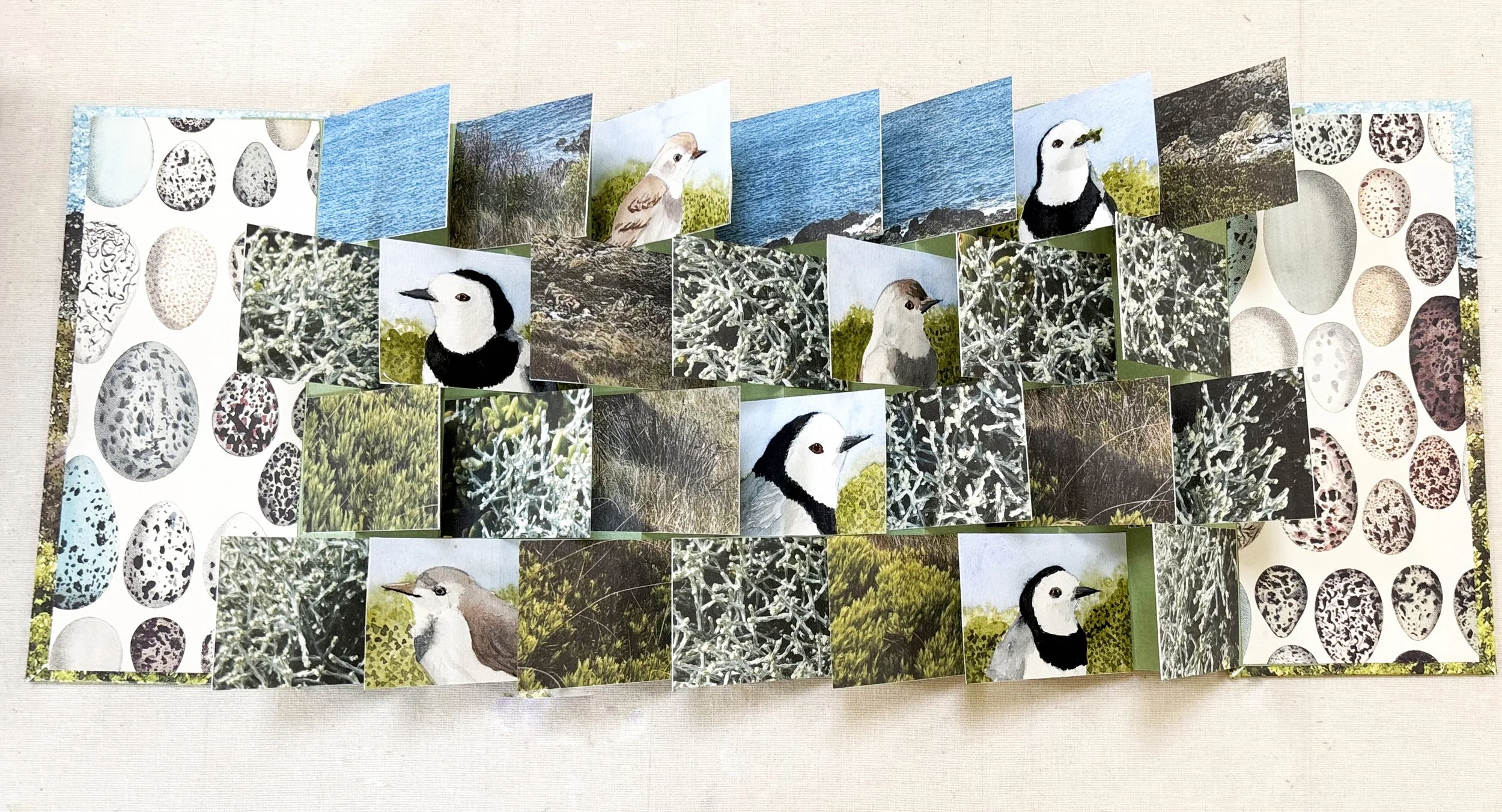
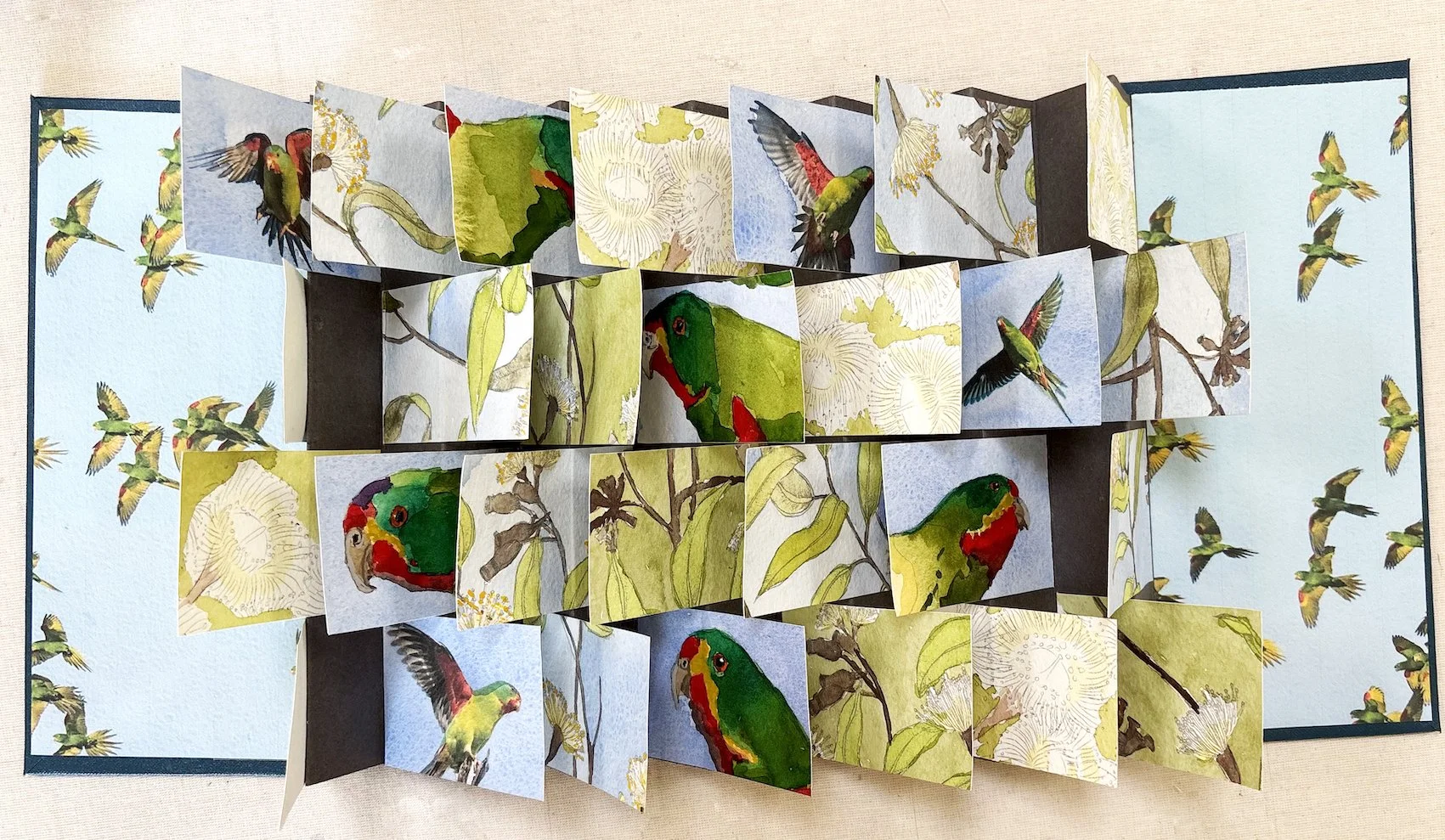
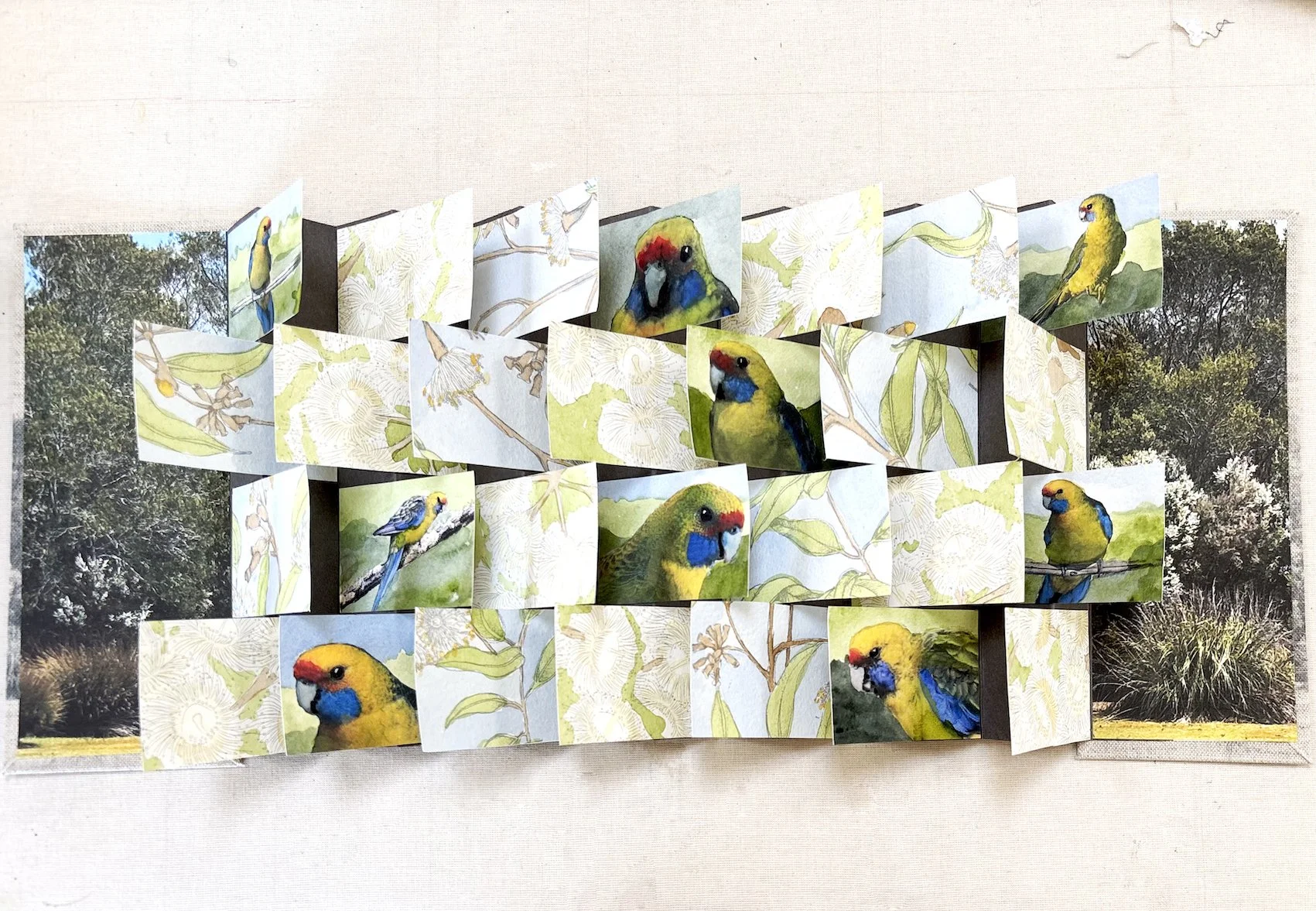
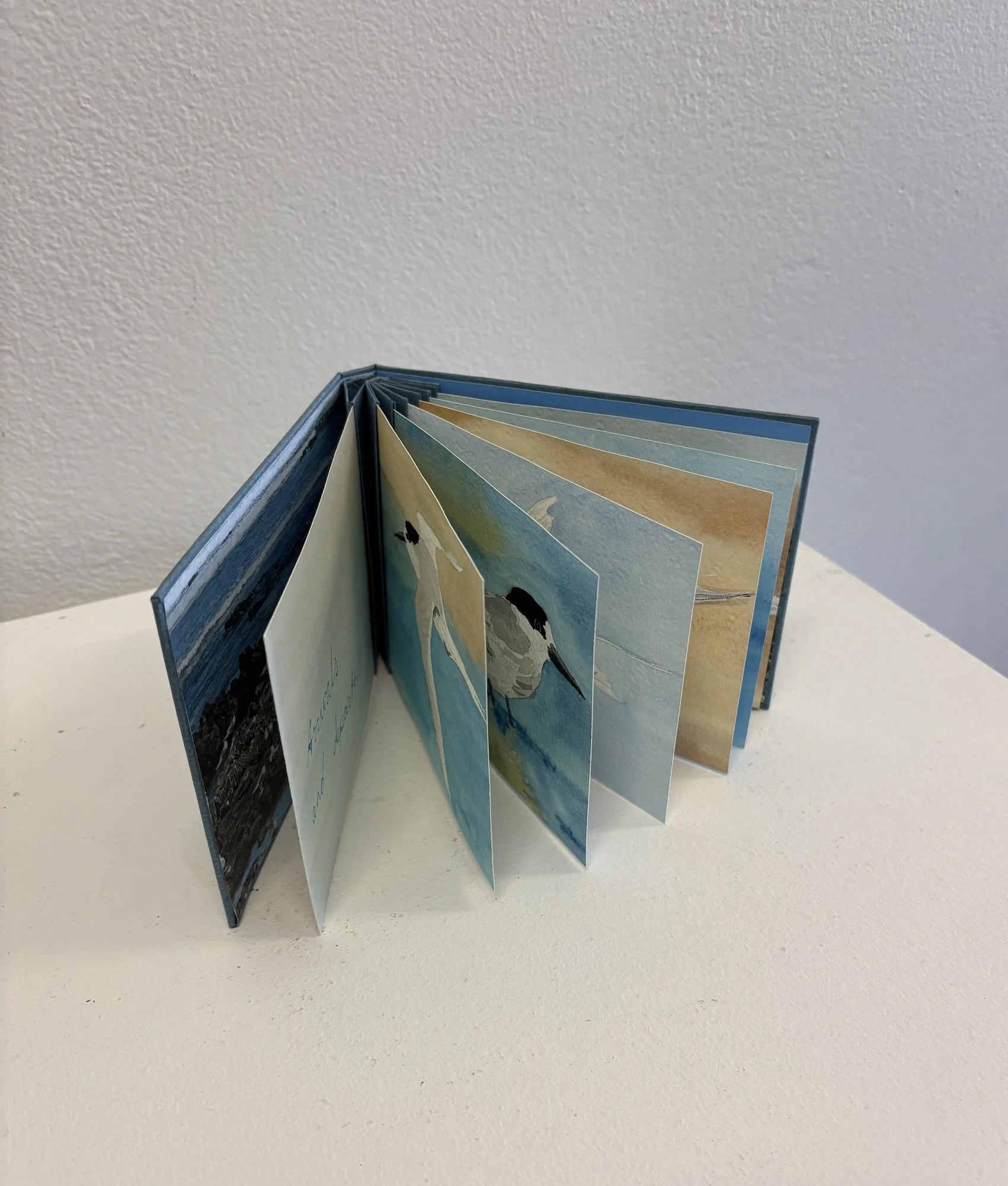
The ‘bird guide’ books are more for the birds - a guide to the best spots on the island where their favourite foods can be found. Three of the books are called flag books - concertina books. Again flagging for the birds their favourite habitats.
In October 2024, as artist in residence on King Island in the Bass Strait between mainland Australia and Tasmania, I prepared to work on my long-term focus of birds and bird sounds. My motivation for applying was, in the previous year, I had hand bound a copy of a letter written by the French explorer Nicholas Baudin written from King Island in 1802. Bound copies of the letter, printed by the South Australian State Library, were shown in a travelling exhibition in several small galleries in Australia. I embroidered an image of the extinct King Island emu for the cover of the book and stitched a map within the book-case. I was keen to travel to the source to build on my work on birds.
Once on the island the very strong winds, the Roaring Forties, quickly shifted my intentions of making the aural visible. I participated in the Spring bird count organised by the local LandCare group and supported by Birdlife Australia. What became apparent was the observation that all participants, including myself, sported binoculars. These status pieces were worn much like jewellery around the neck. Combining this format with the birds seen on the count and the local bird guides led me to constructing artworks based on binoculars in my home studio. I worked with an engineer to 3-D print parts of binoculars, such as the focussing mechanism and eye pieces. The feathers matched the birds I saw as well as those that are extinct and endangered on King Island. In particular work comments on the steep decline of the number of Swift Parrots, that migrate from northeastern Australia, across King Island and onto Tasmania in the spring and summer to feed. In the 1980s there were 3500 parrots. With the decimation of breeding grounds by logging, experts say that by 2030 there will be 70.
I chose the hallway space as often binoculars are kept in accessible spots in order to be able to grab them as you run out the door to see what bird was making that noise.
The ‘bird guide’ books are more for the birds - a guide to the best spots on the island where their favourite foods can be found. Three of the books are called flag books - concertina books. Again flagging for the birds their favourite habitats.
Quisque iaculis facilisis lacinia. Mauris euismod pellentesque tellus sit amet mollis.